From Broadside to Newsroom: Why Context Became Part of the Story
Context in news helps readers see how a report is shaped by its setting, format and limits, without mistaking extra detail for certainty or completeness.
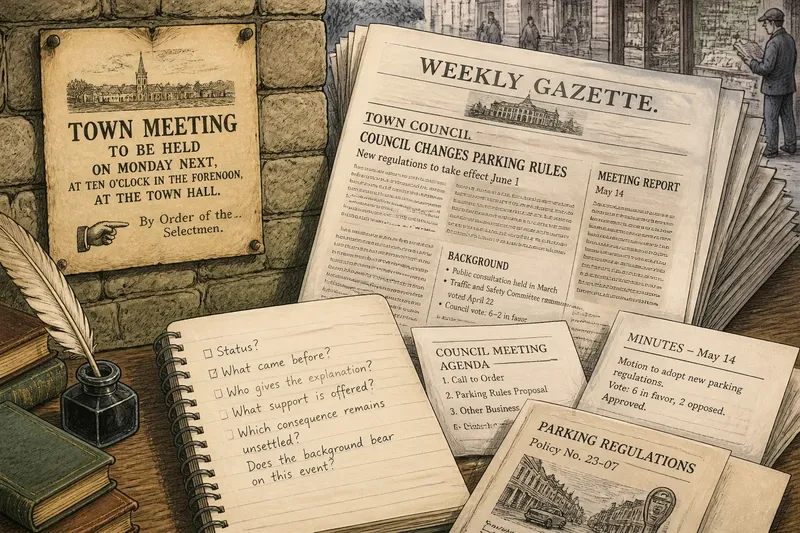
A notice pinned to a town wall might announce a meeting, a sale or a change to a local rule. Its few lines could tell passers-by what was happening, but not necessarily how the decision had been reached. Context in news still asks that same practical question: what surrounds the reported event, and what does that material allow a reader to understand?
What could a broadside explain?
A broadside was a printed sheet used for public notices and announcements. Its compact form suited a message meant to be read quickly: a date, a place, an instruction or an official statement.
That description is a simplified account of one kind of printed communication, not a claim that every broadside served the same purpose. Nor was a notice automatically incomplete for the task it was meant to perform. A meeting announcement could do its job without explaining the history of the issue on the agenda.
The useful distinction is between a notice and an account. A notice tells readers that something is scheduled or announced; a report may describe what happened and set it alongside relevant background. Neither form, by itself, tells us everything about the event.
What changed when news appeared in regular publications?
As printed news took forms that brought separate items together, readers could encounter a notice alongside reports about related events. Editors could also add explanatory material. The details varied across publications and periods, so it is safer to describe this as an opportunity created by format than as a uniform historical progression.
That opportunity did not make longer reports complete or neutral by default. A report might still leave out a relevant voice, rely on an incomplete record or describe a dispute from one angle. More room can make relationships visible, but only if the reporting supplies pertinent information and makes its basis clear.
Length is not a substitute for context. Look for what the added detail actually clarifies.
What does context in news help explain?
Context connects an event to information needed to interpret it: what preceded it, who had authority, what a term means in this case, and which consequences are known or still uncertain. It can also show how a report’s claims relate to the sources it names.
Compare “The council changed the parking rules” with an account that identifies the streets affected, the date the change is due to take effect and the reason officials gave. Those details narrow the meaning of the headline. If the account also describes residents’ objections, readers can see that the decision has prompted disagreement without assuming that the objections altered its status.
Context should be relevant rather than exhaustive. A report need not recount every earlier event; it should provide enough background to make its present claims intelligible and signal significant gaps.
How can background alter a report’s meaning?
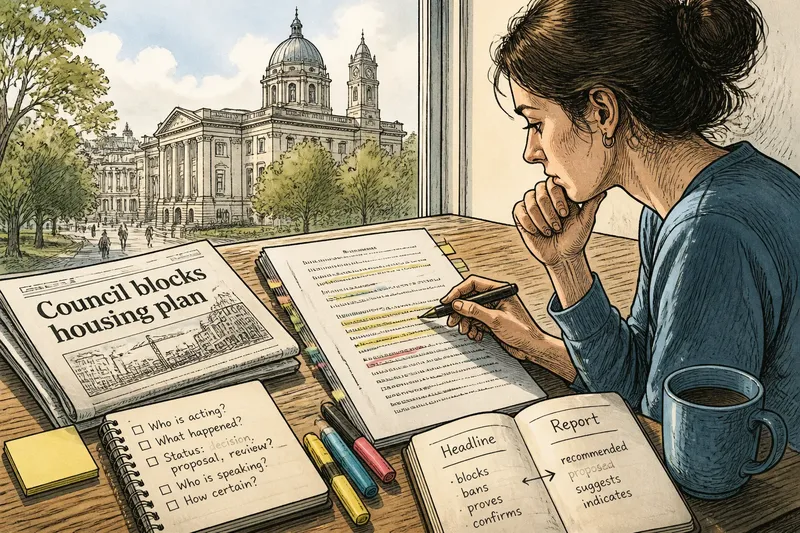
A headline can make a plan sound settled if the report does not explain its status. A few precise words—“proposed”, “approved” or “in force”—can change what readers should infer. The date of an announcement and the date an outcome takes effect may also be different.
Background can clarify sequence, but sequence alone does not establish cause. If a report says an event followed a policy change, that order does not prove the change caused it. An official’s explanation is evidence of what that official says, not automatically an independently established account of causation.
When you read, separate what happened from who is explaining why it happened.
Where can readers look for the surrounding account?
Start with the article’s own structure. A timeline, named decision-making body, explanation of an unfamiliar term or link to a record may show how the report supports its account. If the relevant material is absent, identify the particular gap rather than treating every omission as equally important.
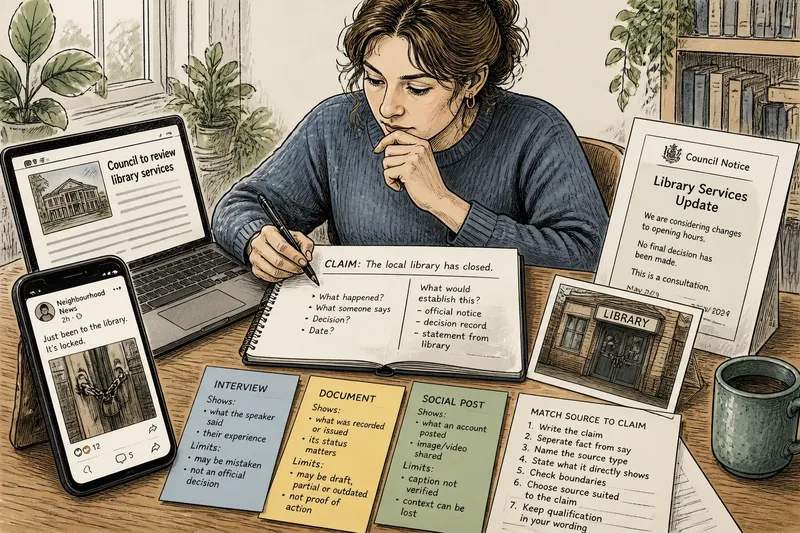
For a public decision, an agenda, minutes, policy document or official notice can clarify what was discussed or formally recorded. Such documents may use technical language and may not explain wider effects. They are useful for checking the wording and procedural status of a claim, not for answering every question about its consequences.
Earlier coverage can establish what was reported at an earlier point. Read each item on its own terms: a consultation, recommendation and adopted decision describe different stages, and a later account may update an earlier one.
Say you read a local report that a school plans to change its admissions policy. The report quotes the school’s announcement but does not say whether the relevant authority has approved it. You check the published policy and the authority’s meeting record; if the record shows approval, you can distinguish the authorised change from the school’s earlier announcement, while still checking when the policy applies. If approval is not recorded, the status remains unclear rather than settled.
What should you ask when background is thin?
Choose questions that address the specific claim in front of you. A useful check connects an observable feature of the report to a next action, rather than treating a missing detail as evidence of intent.
- Is the event’s status stated? If the report says “proposed”, treat it as a plan and look for a later decision; if it says “approved” but names no authority or record, seek the relevant notice or minutes.
- Does the account identify what came before? If it names an earlier vote or process, check the date and record; if it offers no link or detail, look for the specific prior event that could alter your reading.
- Who gives the explanation? If a named official or affected person is quoted, keep the reason attributed to that source; if the report presents a reason without identifying its basis, avoid treating it as independently confirmed.
- What support is offered for the claim? If the report links a document or describes a direct statement, inspect whether it supports the wording used; if no basis is supplied, limit your conclusion to the claim as reported.
- Which consequence remains unsettled? If the report says an effect or next step is pending, keep it open; if it gives no update, seek a relevant later record before assuming the outcome.
- Does the added background bear on this event? If it explains the decision’s scope or history, use it to interpret the report; if it is remote from the claim, set it aside rather than letting it determine your conclusion.
If an account leaves a question unanswered, that sets a limit on what it supports. It does not, on its own, show that information has been deliberately withheld.
Can context make a report less clear?
Yes. Background can distract when it is remote from the current claim or appears without explaining its relevance. A long history may obscure the decision readers came to understand; a cluster of side details may make the central issue harder to see.
There is also a difference between context and certainty. A fuller account may reveal conflicting explanations, gaps in records or consequences that have not emerged. Good reporting leaves those uncertainties visible instead of smoothing them away.
Ask whether each detail helps explain the event’s status, its relation to what came before or the limits of the available account. If not, it may be colour rather than context.
What do readers ask about context in news?
Is context the same as background?
Background is information about what came earlier; context is the information that helps interpret the current event. A report selects background because it bears on the present claim, not merely because the past is related.
Can a short report provide context?
Yes. A brief report can name the responsible body, state whether a decision is proposed or approved, and point to a relevant document. A longer account may add detail, but length alone does not establish that its claims are better supported.
Should a report include every side of a dispute?
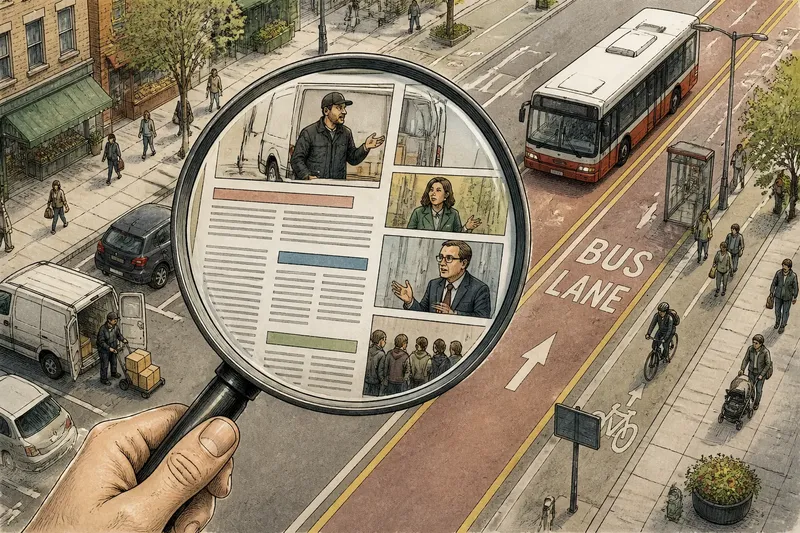
It should identify relevant positions fairly and make clear who is making each claim. That does not require treating every assertion as equally supported; readers also need to know what evidence is offered and what remains unsettled.
What if a report leaves out history?
Identify which missing detail could change your understanding, then seek a relevant record or earlier account. If you cannot clarify it, keep your conclusion within the limits of the report.
A notice can be clear about its immediate purpose, while a fuller report can show more of the setting around an event. When you look for context in news, pay attention to who is speaking, what stage an event has reached and what the available account leaves open. Those distinctions help you read the report closely without asking it to say more than it does.